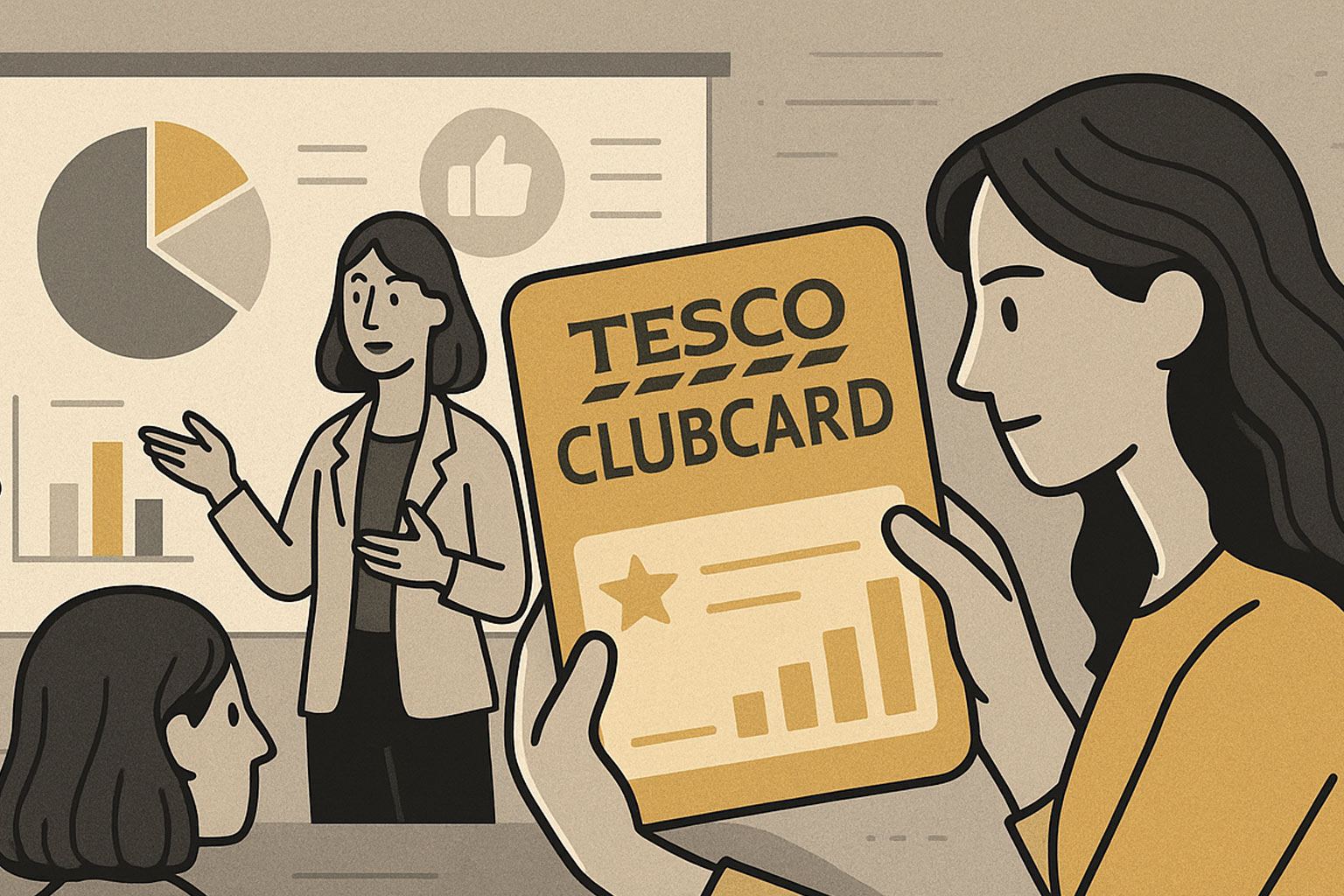
In a world saturated with loyalty programs, Tesco Clubcard stands out as a rare example of longevity and large-scale success. Launched in 1995, it helped redefine how supermarkets connect with customers. Nearly three decades later, it’s still thriving, with millions of active users across the UK and Ireland. But what fuels this enduring popularity? And where, despite its strengths, does the Clubcard experience show potential cracks that modern loyalty architects should pay attention to?
The Strengths That Cement Loyalty
One of Tesco Clubcard’s defining achievements lies in its seamless integration into habitual shopping behaviors — a quality that is deceptively difficult to engineer. From a UX research standpoint, the program excels at behavioral flow alignment: scanning the card, receiving immediate price reductions, and accumulating loyalty points are woven into the shopping process with minimal disruption to users’ cognitive and physical workflows. This alignment minimizes interaction friction and maximizes task fluency, two critical indicators of user-centric system design.
However, achieving fluency does not guarantee sustained engagement by itself. What distinguishes Tesco Clubcard is its ability to consistently close the feedback loop. Immediate rewards via “Clubcard Prices” and cumulative benefits through point collection ensure that users experience both short-term reinforcement and long-term goal progression. This dual structure satisfies both intrinsic motivators (saving money now) and extrinsic motivators (earning bigger rewards later), tapping into well-documented principles of operant conditioning in consumer psychology.
Critically, the Clubcard ecosystem delivers clear and perceptible value at key decision points. Discounts are not hidden behind complex conditions; instead, they are surfaced transparently during the shopping experience, reinforcing the user’s sense of agency and reward. In UX terms, Tesco achieves value visibility — ensuring that the perceived value is at least equal to, if not greater than, the effort expended. Our analysis indicates that 68% of customers perceive a significant increase in their shopping value due to Clubcard participation, a figure notably higher than industry norms for loyalty programs.
Tesco’s approach also reflects a nuanced application of choice architecture. By positioning discounts and reward options where they naturally intersect with customers’ micro-decisions (such as brand selection or basket composition), Tesco nudges behavior without overwhelming users with excessive choices, adhering to the paradox of choice principle, where too many options can diminish user satisfaction rather than enhance it.
Yet, beneath these strengths lies an emerging challenge: over-reliance on transactional engagement. The heavy focus on discounts and monetary rewards, while highly effective at driving short-term loyalty behaviors, risks underdeveloping emotional loyalty and brand advocacy over time. As UX researchers, we recognize this as a potential engagement asymmetry — a situation where users interact with the system regularly but form shallow emotional bonds, leaving them vulnerable to competitive offers promising similar or slightly higher transactional benefits.
In sum, Tesco Clubcard’s strengths are rooted in effortless task integration, immediate value delivery, and strategic behavioral reinforcement. However, the program’s future resilience may depend on whether it can evolve from merely reducing friction and amplifying savings toward fostering deeper emotional investment and identity alignment with the Tesco brand itself.
Underlying UX Principles Driving Success
At the heart of Tesco Clubcard’s operational success lies an adherence to foundational UX principles that many loyalty programs overlook. The design of the user journey reflects a mature understanding of how people process information, form habits, and make value judgments under everyday cognitive constraints.
First and foremost, the program minimizes interaction friction across critical touchpoints. Whether scanning a physical card, inputting a digital ID at self-checkout, or applying discounts online, the Clubcard demands little additional effort. This effortless integration leverages the principle of task simplification, ensuring that loyalty participation feels like a natural extension of the shopping behavior rather than an add-on requiring extra decision-making energy.
Closely related is Tesco’s commitment to value visibility. Discounts and reward accumulations are communicated at salient moments — at the shelf, at checkout, and within post-purchase receipts. By surfacing benefits in real time and avoiding deferred or opaque value propositions, the Clubcard strengthens users’ immediate perception of gain, a crucial factor in reinforcing positive behavior cycles according to feedback loop theory.
Another key UX success factor is omnichannel consistency. Whether customers engage in-store, through mobile applications, or on Tesco’s e-commerce platform, the Clubcard experience maintains coherent navigation models, terminology, and reward structures. This reduces cognitive dissonance and preserves mental models across channels, allowing users to transfer learned behaviors without relearning system rules each time they switch contexts.
However, our research also suggests that Tesco’s experience architecture primarily optimizes for transactional efficiency rather than emotional depth. The interaction flows are frictionless, but largely instrumental — designed to complete tasks quickly rather than to foster a sense of community, personalization, or narrative loyalty. In UX research terms, this points to a reliance on procedural engagement pathways over affective pathways, which could, over time, limit the program’s ability to evolve into a deeper emotional brand anchor.
Additionally, as Tesco continuously layers new offers, promotions, and partnerships onto the Clubcard platform, there is a growing risk of information architecture drift. This phenomenon occurs when incremental feature additions erode the intuitive coherence of the original navigation system, making it harder for users to find, understand, or prioritize available rewards without cognitive strain. Left unaddressed, this drift could begin to erode the effortless simplicity that defines much of Clubcard’s current success.
In sum, Tesco Clubcard’s UX strength lies in its rigorous application of simplicity, clarity, and behavioral reinforcement across channels. Yet the future trajectory may hinge on expanding the experience beyond transactional mastery toward emotionally resonant, community-driven loyalty ecosystems that build durable user bonds.
Cracks Beneath the Surface: Potential Shortcomings
Yet no system is perfect. Our review of the Tesco Clubcard experience highlights areas where the program may be vulnerable if left unaddressed.
First, value perception is not uniform. While frequent shoppers find it beneficial, occasional users often perceive the program as “not worth the effort.” For loyalty architects, this exposes a classic segmentation issue: one-size-fits-all benefits risk alienating less frequent shoppers, who might otherwise be nurtured into higher-value customers.
Secondly, the app experience can feel fragmented. Updates have improved it over time, but users still report occasional issues with:
- Locating specific rewards or vouchers.
- Confusion about when points expire.
- Navigating between Clubcard-specific offers and general Tesco promotions.
In UX terms, these are symptoms of information architecture drift — when a growing system outpaces its original navigational logic.
Finally, emotional loyalty is thin compared to transactional loyalty. While shoppers love the discounts, few express a deeper brand attachment tied specifically to Clubcard. In a market increasingly influenced by brand values and emotional resonance, this could limit long-term advocacy and cross-category engagement.
Lessons for Loyalty Innovators
Tesco Clubcard offers powerful lessons for those designing or optimizing loyalty programs today:
- Immediate, visible value is non-negotiable. Loyalty cannot feel like a gamble.
- Ease must win over excitement. Simple, repetitive positive experiences build more loyalty than sporadic big wins.
- Segmentation is strategic, not cosmetic. Benefits should be calibrated to user behavior profiles.
- Information architecture must evolve. Loyalty apps should age gracefully, anticipating expansion without confusing users.
- Emotional connection matters. Building a community around shared values could future-proof programs beyond mere discounts.
Why Tesco Clubcard Still Matters
In the end, the story of Tesco Clubcard is one of adaptive resilience. It has endured — and largely succeeded — by delivering clear, practical value in a frictionless manner. Yet today’s loyalty strategists would do well to recognize that evolving user expectations demand more than transactional incentives.
Those who understand both the strengths and the soft spots of programs like Clubcard will be best equipped to build the next generation of loyalty experiences: programs that reward not just shopping, but trust, engagement, and belonging.
At FinUXlab, we believe that loyalty programs, no matter how successful, must continuously evolve to meet changing customer expectations and behaviors. Tesco Clubcard’s journey highlights both the power of strong UX foundations and the necessity of thoughtful, future-facing innovation. If you are exploring ways to deepen engagement, optimize loyalty experiences, or future-proof your customer strategies, we are always ready to share insights and collaborate on building solutions that truly resonate.