


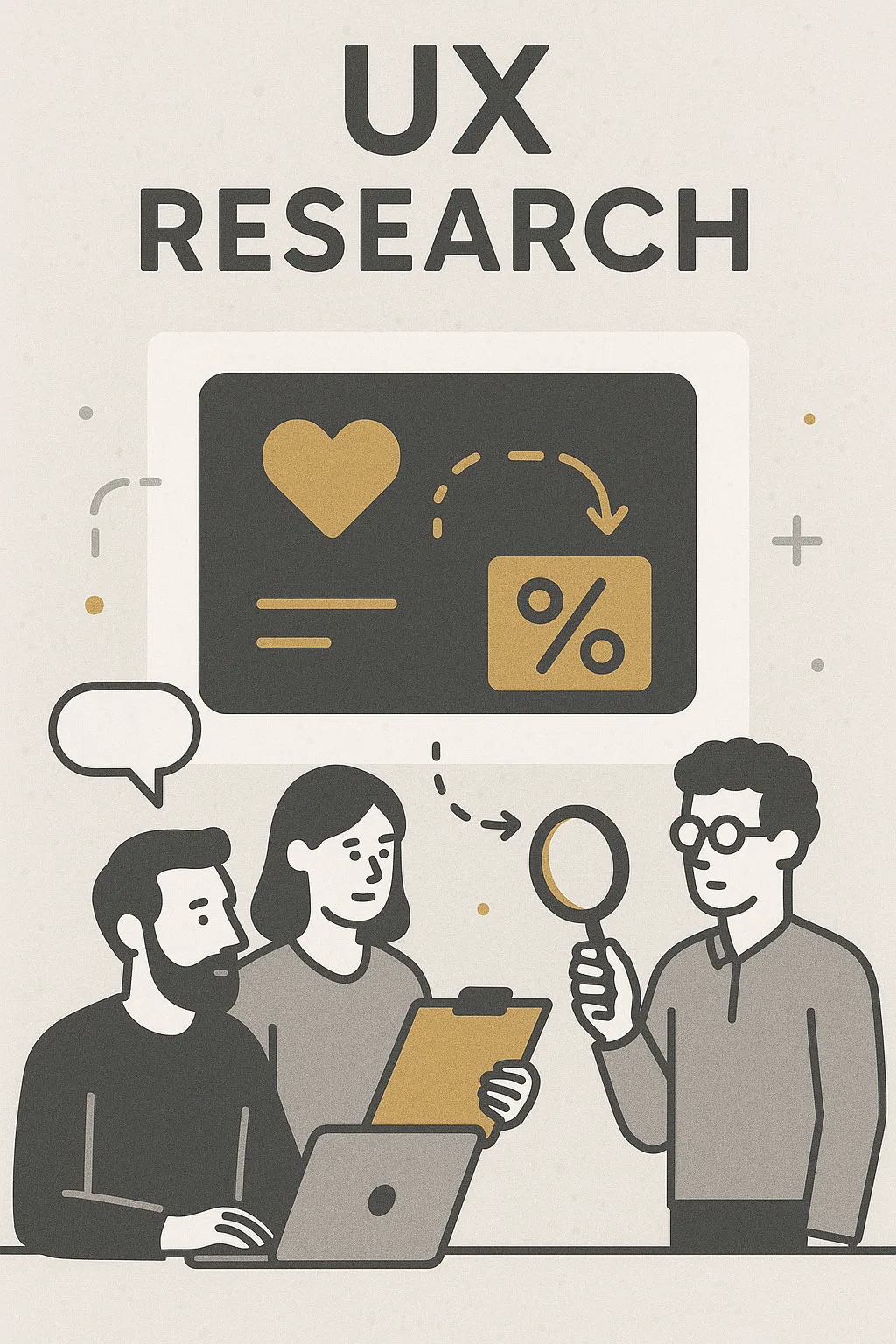
Serious about UX. Friendly about it too.
UX research and analysis of loyalty programs
Effective loyalty programs are built on a clear understanding of how users actually interact with them.
At FinUXlab, we study real-world loyalty experiences — from account setup and onboarding to everyday use and reward redemption.
Our research focuses on mapping user journeys, identifying friction points, and highlighting patterns that explain why certain loyalty systems feel intuitive while others create confusion or drop-off.
These insights are shared through research articles, case studies, and UX analysis to help teams better understand loyalty user behavior.
What we research and analyze
FinUXlab focuses on researching how users experience loyalty programs in real-world contexts.
Our work covers a wide range of UX research methods — from usability testing and gap analysis to ethnographic observation and expert evaluation — all aimed at understanding what helps loyalty systems succeed or fail from a user perspective.
What defines our loyalty UX research approach
At FinUXlab, we focus on understanding how users actually experience loyalty programs in everyday situations.
Our research-driven approach combines behavioral analysis, usability insights, and real-world observation to explain what works, what fails, and why.
Years studying loyalty user experience
Hours of UX research and analysis
User-centered research focus

Hannah Borman
Co-Founder & Head of UX, Borman&Mayer’s Telecom
“FinUXlab’s research helped clarify how users actually experience our loyalty platform.
The journey mapping and usability insights highlighted where the experience needed simplification.”

Paul Wallace
Founder & CEO, Nexora Financial
“The analysis brought clarity to a complex loyalty setup.
Key UX patterns and problem areas were clearly articulated and easy to reason about.”
How UX research reveals loyalty experience gaps
Loyalty programs often become complex ecosystems that are difficult for users to understand and navigate.
UX research helps reveal where these systems create friction, confusion, or disengagement — and how user expectations differ from actual experience.
Customer journey analysis
Mapping loyalty journeys to understand where users struggle, disengage, or abandon the experience.
UX research methods
Qualitative and quantitative approaches used to uncover behavioral patterns, usability issues, and decision-making logic.
End-to-end experience insights
Research-based perspectives on loyalty experiences from onboarding and account management to long-term engagement.
Our research approach
At FinUXlab, our research follows a structured, insight-driven approach focused on understanding real user behavior.
We combine methodological rigor with real-world context to explain how loyalty programs are experienced in practice — not just how they are designed on paper.

Discovery and research framing
We start by defining the scope of the loyalty experience under study — including user goals, platform structure, and key interaction points — to determine which research methods are most relevant.

User research and usability analysis
Using methods such as usability testing, journey mapping, and behavioral observation, we examine how users actually interact with loyalty programs across different stages of use.

Analysis and insight synthesis
Research findings are synthesized to highlight friction points, behavioral patterns, and expectation gaps that shape the overall loyalty experience.
Reimagining loyalty programs from a user perspective
UX research helps explain why some loyalty programs feel seamless while others create friction and disengagement.