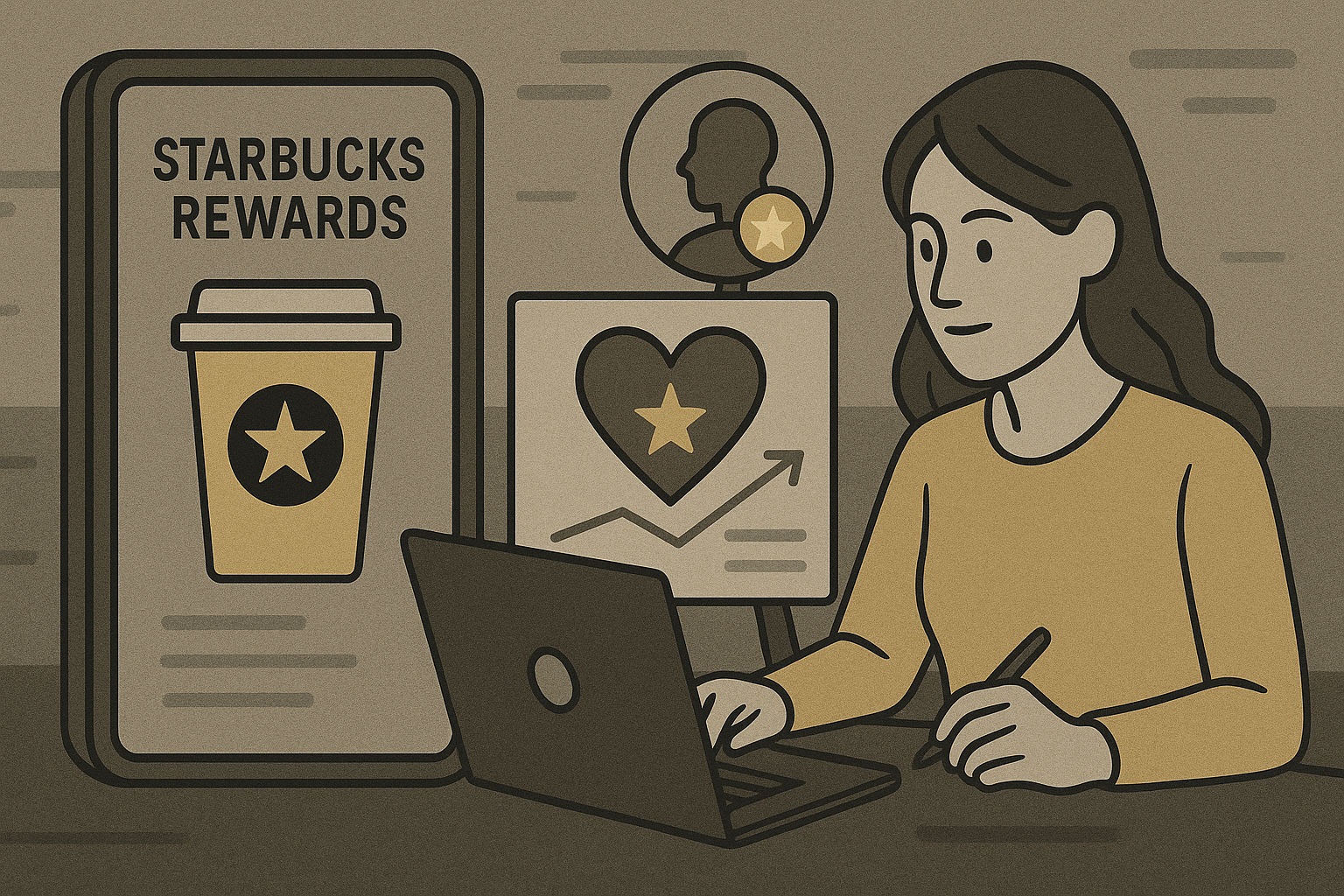
Starbucks Rewards is often cited as a gold standard in loyalty programs. With over 30 million active members globally, it’s more than just a points system—it’s a behavioral design engine that blends habit formation, emotional triggers, and seamless digital UX. In this case study, we dissect how Starbucks Rewards sustains engagement, where it creates friction, and what lessons it offers for loyalty programs in retail and beyond.
Program Overview: Simplicity with Strategic Depth
Starbucks Rewards operates on a tiered “Stars” system:
- 1 Star per $1 spent when paying with cash, credit/debit cards, or mobile wallets after scanning the member barcode
- 2 Stars per $1 when paying with a registered Starbucks Card via the app
- Bonus Stars through promotions, partner offers (e.g., airline partnerships, bank promotions), and seasonal challenges
Redemption tiers range from 25 Stars for drink customizations to 400 Stars for merchandise. The logic feels simple at a glance—but hides layered incentives that push behavioral consistency.
UX Strengths: Why It Works
1. Integrated Habit Loop
The Starbucks app embeds the entire customer journey—ordering, payment, rewards tracking—into a single interface. This reduces friction and reinforces habitual use. Users are trained to repeat the same loop with minimal deviation.
2. Emotional Anchoring
Personalized offers, birthday rewards, and gamified challenges create emotional touchpoints that deepen user connection. Loyalty becomes more than rational—it’s felt.
3. Perceived Value
The tiered rewards system provides clear, attainable goals. Even small redemptions (e.g., extra shot or flavor syrup) make everyday purchases feel more rewarding. It’s not about saving money—it’s about getting something extra.
UX Challenges: Areas for Improvement
1. Complexity in Reward Redemption
Despite the simplicity of the star-earning mechanism, the redemption process can feel convoluted. Different rewards cost different Star amounts, and not all items are eligible. This creates decision fatigue and erodes the ease of the experience.
2. Limited Accessibility
The app’s design does not always align with accessibility best practices. Users with visual or motor impairments may struggle to navigate or interact with features that rely heavily on swiping or tapping small icons.
Behavioral Insights
Starbucks Rewards is built on core principles of behavioral economics:
- Endowment Effect: As users accumulate Stars, they feel a sense of ownership over future rewards, increasing the drive to stay active.
- Variable Rewards: Surprise bonuses and seasonal challenges activate anticipation and delight—two strong emotional levers in loyalty design.
The program isn’t just tracking behavior; it’s shaping it.
Financial Implications
Stored-value balances from loyalty-linked Starbucks Cards regularly exceed a billion dollars, essentially functioning as an interest-free loan to the company. A significant portion of this value goes unredeemed—referred to as “breakage”—and represents direct profit. This business model only works because the UX makes users willing participants in a system of deferred reward.
Recommendations for Loyalty Program Designers
1. Simplify Redemption: Reduce Friction, Increase Conversion
One of the most frequent points of user confusion in Starbucks Rewards stems from the variable Star thresholds: 25, 50, 150, 200, 400—each tied to different categories of products. While this structure allows for flexibility and upselling, it often overwhelms users who simply want to know: “What can I get now?”
UX Design Actions:
- Introduce real-time “redeem now” prompts during checkout based on current Star balance and past redemptions.
- Replace abstract thresholds with visual progress indicators toward specific, desirable rewards (e.g., “2 orders until your free handcrafted drink”).
- Avoid nested menus or pop-ups that require tapping multiple times to reach redemption details.
- Conduct tree testing on your rewards catalog. If users can’t predictably find where their Stars can be used, you’re losing engagement.
2. Enhance Accessibility: Serve the Full Customer Base
Loyalty programs often cater to tech-savvy, mobile-first users by default—but overlook the needs of customers with visual, motor, or cognitive impairments. In Starbucks Rewards, for example, color-coded progress bars and small touch targets can create barriers.
UX Design Actions:
- Ensure WCAG 2.1 compliance across the entire loyalty flow—from sign-up to reward redemption.
- Implement dynamic font scaling for users with vision impairments, and test on both Android and iOS devices with accessibility settings enabled.
- Replace icon-only navigation with text labels for clarity and screen reader compatibility.
- Consider voice-based interaction models or chatbot interfaces for users with limited motor control.
- Include users with disabilities in usability testing from early prototype stages—not just as a compliance check at the end.
3. Personalize Responsibly: Nudge, Don’t Manipulate
Starbucks leverages personalization through seasonal offers, preferred item prompts, and partner-linked challenges. However, personalization that feels too aggressive – or that uses opaque logic – risks backfiring.
UX Design Actions:
- Be transparent about why a user sees a specific offer: “Because you ordered a chai latte 3 times last month” gives context and builds trust.
- Let users opt in or out of gamified challenges or bonus campaigns. Forced gamification can feel infantilizing.
- Avoid using urgency or scarcity cues (like countdown timers) in contexts involving stored monetary value. These can feel coercive rather than motivating.
- Use ethnographic research to understand emotional responses to personalization—especially across cultures, ages, and shopping mindsets.
Conclusion
Starbucks Rewards is a masterclass in loyalty through design. Its success lies not in technology alone, but in a clear understanding of how customers think, feel, and behave. For product teams building the next generation of loyalty platforms, the lesson is clear: loyalty is earned through experience, not just incentives.
At FinUXlab, we continue to study systems like this to uncover what truly drives engagement. Because in the end, loyalty isn’t just measured in repeat visits—it’s measured in trust.