Personalisation is widely regarded as the holy grail of e-commerce loyalty programs. Done right, it builds relevance, anticipation, and a sense of individual attention. But when it misfires—when offers feel off-target, or when rewards seem arbitrary—it doesn’t just fail silently. It breaks trust.
This UX case study examines Sephora’s Beauty Insider program: one of the most sophisticated and widely adopted loyalty ecosystems in retail. By dissecting both its strengths and friction points, we expose where over-engineered personalisation can alienate the very users it seeks to retain.
Program Overview: Sephora Beauty Insider
Sephora’s Beauty Insider is a three-tiered loyalty system designed to reward customers based on their annual spend:
- Insider (free for all)
- VIB (spending $350+ per year)
- Rouge (spending $1,000+ per year)
All tiers earn 1 point per dollar spent, with occasional multipliers through promotional events. Points can be exchanged for curated rewards in the Rewards Bazaar, including product samples, deluxe items, experiences, and even sweepstakes entries.
Beyond point accrual, the program invests heavily in personalisation: birthday gifts, early product access, and tailored recommendations form the emotional infrastructure of the ecosystem.
UX Strengths: Where Personalisation Succeeds
1. Tailored Product Suggestions
Sephora uses browsing data and purchase history to recommend relevant items directly within the app and via email. For users deeply immersed in beauty categories, this creates a sense of being “understood” by the brand—especially when recommendations reflect preferences in skin type, shade range, or brand loyalty.
2. Targeted Offers Based on Tier and Behavior
Higher-tier users receive exclusive promotions, often framed around their past shopping habits (“Your perfect skincare trio is back”). These moments of personalisation can drive emotional loyalty—when the timing and content feel just right.
UX Challenges: When Personalisation Misses the Mark
1. The Rewards Bazaar: Scarcity and Frustration
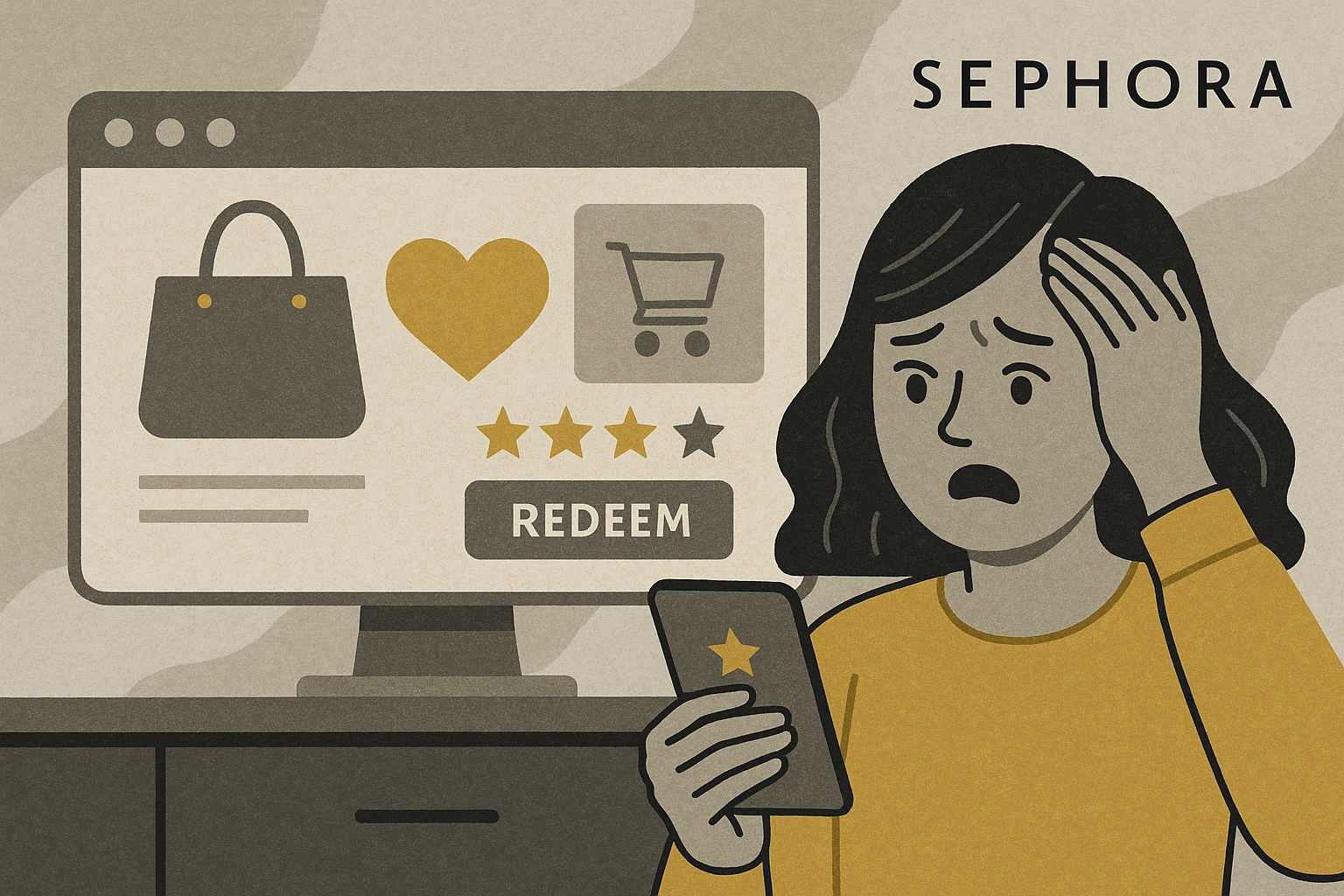
While the Bazaar is meant to add excitement, it often causes friction. Desirable rewards disappear within minutes of being released. Users report setting alarms for weekly drops, only to find “sold out” banners moments after launch. This creates a system perceived as unfair, especially by high-tier members who’ve saved points for months.
2. Disconnected Recommendations
Despite the data richness Sephora holds, recommendations can feel strangely disconnected: haircare suggested to users with no history in that category, or bold makeup to shoppers consistently buying neutrals. This suggests over-reliance on general patterns or seasonal campaigns rather than true personal context.
Behavioral Insight
The psychological contract behind a loyalty program is fragile. When users feel that rewards are random or impersonal, it violates their expectation of being recognised as individuals—not just transactions. Worse, perceived manipulation (“Why are they pushing this brand on me?”) can lead to disengagement, or even churn.
Recommendations for Enhancing Personalisation
1. Make Personalisation Transparent and Earned
Personalisation should feel like a two-way conversation, not a hidden algorithm at work. Users are more receptive when they know why something is recommended. A simple “Suggested based on your last 3 purchases” adds clarity and credibility.
Action Points:
- Include micro-explanations with product suggestions.
- Let users adjust personalisation parameters (e.g. “more skincare, fewer fragrance suggestions”).
- Provide a “Why this offer?” link on promo emails or app banners to increase transparency.
2. Reform Reward Availability Through Predictability and Equity
Scarcity can drive excitement – but too much unpredictability breeds resentment. Instead of surprise drops, loyalty programs should explore hybrid models of predictable redemption with periodic exclusives.
Action Points:
- Allow users to pre-reserve rewards or receive alerts based on wishlist preferences.
- Introduce inventory transparency: “52 left” signals urgency without mystery.
- Design tier-based access windows (e.g., Rouge access 24h before others), with clear scheduling to avoid ambiguity.
3. Refine Algorithms Using Consent-Based Signals
Customers today are sensitive to how their data is used. Instead of relying solely on passive signals (clicks, views, purchases), programs should integrate consent-based preferences.
Action Points:
- Offer onboarding preference quizzes (e.g. “Choose your skincare goals”) and allow updates anytime.
- Incorporate explicit feedback on recommendations (e.g. thumbs up/down or “Not relevant to me”).
- Combine passive and active signals to adjust content delivery over time, reducing the risk of tone-deaf suggestions.
4. Test Emotional Accuracy Through Diary Studies
Quantitative metrics like CTR or redemptions only reveal part of the story. Emotional response – frustration, excitement, confusion – is what drives long-term perception.
Action Points:
- Run diary studies to observe how users react to the flow of offers and redemptions over a month.
- Map perceived value against emotional triggers: Is a 500-point reward exciting or exhausting?
- Use emotional journey maps to adjust the rhythm of communication and reward distribution.
Conclusion
Sephora’s Beauty Insider stands at the intersection of algorithmic ambition and emotional experience. It’s a mature, data-driven loyalty platform—but even mature systems can falter when personalisation becomes performance.
The lesson for e-commerce loyalty leaders is clear: relevance must be felt, not just inferred. When users feel like their rewards are random—or worse, manipulative—they disengage. But when personalisation is clear, responsive, and emotionally resonant, it doesn’t just drive transactions. It builds relationships.