In the landscape of competitive gaming, few ecosystems evolve as deliberately as Fortnite. Epic Games’ recent overhaul of the Ranked Rewards System in 2025 is more than a seasonal refresh — it represents a case study in UX innovation and loyalty system dynamics. This article unpacks how the new system was shaped, the behavioral levers it pulls, and what makes it such a powerful engagement engine.
From Cosmetic Trinkets to Strategic Progression: A Timeline of Reward Evolution
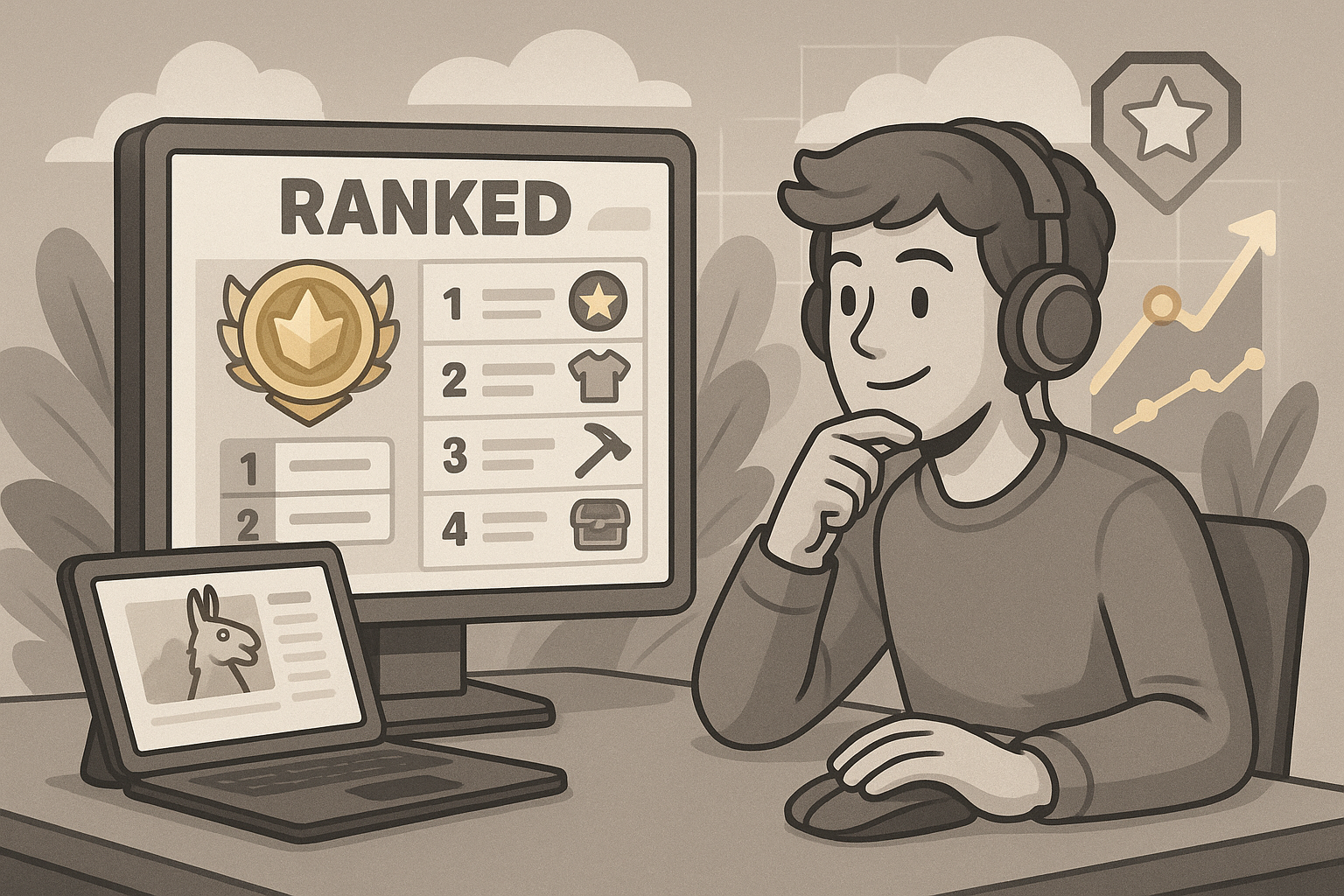
Fortnite’s early reward systems were largely cosmetic — emotes, skins, back bling. These items had high aesthetic value but limited functional or status-bearing weight. Over time, however, the reward economy evolved alongside player expectations. Battle Passes brought structured tiers. Daily quests and limited-time events introduced variable incentives. But the 2025 ranked rewards system marks a new phase: dynamic, tiered, and behaviorally adaptive.
Key features now include:
- Performance-based unlocks tied to consistent play and win streaks.
- Rank-exclusive cosmetics that cannot be obtained through purchases.
- Retroactive tier validation ensuring that reaching a rank isn’t a one-off feat, but something sustained over time.
- Seasonal progression resets that balance fairness with aspirational goals.
This is loyalty engineering at scale — not just retention, but recognition and social capital.
🎮 2017–2018: Foundations of Cosmetic Rewards
- September 2017: Launch of Fortnite Battle Royale.
- December 2017 (Season 2): Introduction of the Battle Pass system, offering cosmetic rewards like skins and emotes through gameplay progression. Fortnite Wiki
- 2018: Implementation of Daily Challenges and Limited Time Modes (LTMs), providing players with additional avenues to earn rewards and engage with the game.
🛠️ 2019–2020: Enhanced Progression and Narrative Integration
- 2019: Epic Games began integrating narrative elements into seasons, adding depth to the gameplay experience.
- Chapter 2 (October 2019): Launch of a new map and mechanics, including swimming and fishing, enhancing player interaction and progression systems.
- 2020: Introduction of collaborative events with franchises like Marvel, bringing exclusive cosmetic rewards tied to in-game events and storylines.WikipediaEGamersWorld
🚀 2021–2022: Diversification of Game Modes and Rewards
- 2021: Expansion of game modes, including “Zero Build,” catering to different player preferences and offering unique rewards.
- 2022: Further diversification with modes like “Lego Fortnite” and “Fortnite Festival,” each featuring distinct progression systems and cosmetic rewards. GameTree+1Polygon+1Wikipedia+2The Verge+2Wikipedia+2
🏆 2023–2024: Introduction of Ranked Mode and Competitive Rewards
- 2023: Launch of Ranked Mode, providing a structured competitive environment with performance-based rewards.
- 2024: Implementation of the “Felina” skin, where players unlock different styles based on their highest achieved rank across various modes, incentivizing competitive play. GameTreeDiario AS+1Epic Games’ Fortnite+1
🌟 2025: Unified Progression and Enhanced Player Recognition
- 2025: Epic Games streamlined progression across all game modes, allowing XP earned in any mode to contribute to Battle Pass advancement.
The UX of Ranked Play: Where Psychology Meets Game Design
Why does this system work so well? The answer lies in a user experience that taps into deep behavioral drivers:
- Competence and mastery: By linking rewards to skill expression and consistency, players feel a sense of earned progression.
- Scarcity and exclusivity: Limited access cosmetics appeal to status-seeking behavior, similar to loyalty program tier perks.
- Feedback and visibility: Rank icons, animation reveals, and post-match summaries all reinforce user effort through immediate, satisfying feedback.
- Community signaling: Wearing a high-tier cosmetic becomes a UX object — a badge within the social interface of the game.
The design borrows from proven reward psychology but contextualizes it within fast-paced gaming cycles. This is UX not just as interface, but as sustained emotional arc.
UX Learnings for Loyalty Programs and Beyond
For those designing loyalty systems in fintech, e-commerce, or subscription-based ecosystems, Fortnite’s ranked model offers several valuable insights:
- Design for visible progress, not just hidden accumulation. Points systems are fine — but humans crave narrative arcs. A visible rank ladder with clear milestones is far more motivating than passive collection.
- Reward consistency, not just peaks. Epic’s system rewards steady engagement over fluke wins. Loyalty programs can emulate this by tracking and rewarding sustained activity.
- Create tiered exclusivity with genuine value. Too often, loyalty tiers are paywalled or feel arbitrary. In Fortnite, exclusive access is performance-earned, which increases perceived fairness and prestige.
- Use seasonal cycles to create rhythm and anticipation. Just as Fortnite resets ranks but honors past achievement, loyalty programs can reset perks while acknowledging long-term commitment.
- Make recognition shareable. Cosmetic rewards aren’t just visual; they’re communicative. Design your program’s rewards to spark conversation and social proof.
The Secret Sauce: UX as Culture
Perhaps the biggest lesson is this: Fortnite’s ranked reward system succeeds because it respects the culture of its players. It doesn’t just deliver incentives — it delivers identity. The interface is part of the experience, but the UX is in the meaning users assign to their rewards.
Whether you’re designing a cashback interface or a premium rewards dashboard, consider this: are you giving your users a system that feels alive? That adapts to their growth? That makes them feel seen?
Fortnite is a game. But in its reward design, it’s also a UX seminar in disguise.